I asked a simple question: what’s the most powerful protest song ever written?
The answers came in fast — and they went in completely different directions. Some pointed to civil rights anthems, others to raw, confrontational tracks, others to songs that don’t even sound like protest at first, but carry something deeper underneath.
There wasn’t a single answer. But there was a clear pattern: protest music doesn’t have one voice — it takes many forms, but it always pushes back against something.
Here are some of the most compelling songs that came up.
1. Strange Fruit — Billie Holiday
Few songs are as devastating. It doesn’t raise its voice — it doesn’t need to. Its power comes from what it shows, not what it argues.
2. Fortunate Son — Creedence Clearwater Revival
Loud, direct, and impossible to ignore. A song about privilege that goes far beyond the Vietnam War — and still feels uncomfortably relevant today.
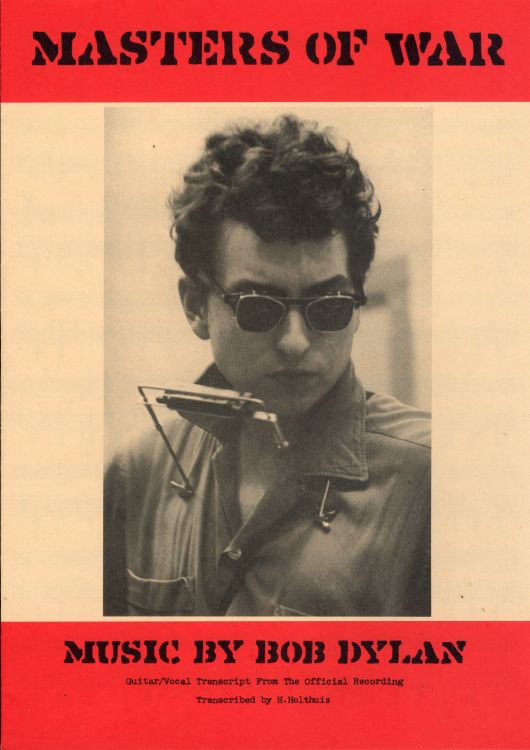
3. Masters of War — Bob Dylan
This isn’t really a protest song — it’s an accusation. Dylan doesn’t hide behind metaphors here, he points directly at those in power.
4. Mississippi Goddam — Nina Simone
Mississippi Goddam doesn’t feel like a song written at a distance — it feels like something happening in real time.
Written in 1964 after the murder of Medgar Evers and the bombing of a church in Birmingham, the song captures a moment of breaking point. Nina Simone doesn’t soften the message, and she doesn’t try to make it comfortable.
There’s anger here, but also precision. The lyrics move fast, almost conversational, as if she’s reacting in the moment rather than delivering something carefully constructed.
That’s what makes it so powerful: it doesn’t just protest injustice — it exposes the urgency of it.
And even decades later, that urgency hasn’t disappeared.
5. Killing in the Name — Rage Against the Machine
Killing in the Name is protest stripped down to its rawest form.
There’s no attempt to soften the message, no metaphor to decode. Rage Against the Machine build the song around repetition, tension, and release — and by the time it reaches its climax, it doesn’t feel like a statement anymore, but an explosion.
It’s not asking for change. It’s rejecting authority outright.
That’s what makes it different from many older protest songs: it doesn’t reflect, it confronts. Directly, aggressively, and without compromise.
And even now, it still feels impossible to ignore.
6. A Change Is Gonna Come — Sam Cooke
A completely different kind of protest. Quiet, emotional, and built on hope rather than anger — but just as powerful.
7. Guerrilla Radio — Rage Against the Machine
If Killing in the Name is confrontation, Guerrilla Radio is momentum.
Fast, sharp, and relentless, the song turns protest into movement. It’s less about a single message and more about a system being exposed piece by piece.
There’s a sense that everything is connected — media, power, control — and the music mirrors that urgency.
It doesn’t pause. It doesn’t explain. It just keeps pushing forward.
8. Redemption Song — Bob Marley
Redemption Song takes a completely different path.
There’s no band, no production, no intensity in the traditional sense — just voice and guitar. And yet, it carries one of the strongest messages in all of protest music.
Instead of confronting external power, Marley turns inward. The focus shifts from systems to mindset, from oppression to liberation.
“Emancipate yourselves from mental slavery.”
It’s a quieter form of protest, but not a weaker one. If anything, it’s more universal — less tied to a specific moment, more connected to something ongoing.
That’s why it still resonates. Not as a reaction, but as a reminder.
9. Ohio — Neil Young
Ohio isn’t just inspired by real events — it was written in direct response to them.
In 1970, four students were killed by the National Guard during a protest at Kent State University. Just days later, Neil Young wrote Ohio, capturing shock, anger, and disbelief while the event was still unfolding in public consciousness.
There’s no distance here. The song feels immediate, almost unfinished in the best sense — like a reaction that couldn’t wait.
“Tin soldiers and Nixon coming…”
The lyrics don’t explain or interpret — they point. They document. And in doing so, they turn a moment into something that couldn’t be ignored.
That’s what makes Ohio different: it doesn’t just reflect history — it becomes part of it.
10. War Pigs — Black Sabbath
War Pigs doesn’t sound like a protest song in the traditional sense — but that’s exactly what makes it so effective.
Instead of describing war from the perspective of those who fight it, Black Sabbath turn their focus toward those who orchestrate it. The song paints a dark, almost apocalyptic picture of leaders who send others to die while remaining distant from the consequences.
“Generals gathered in their masses…”
There’s a sense of inevitability throughout the track — not just anger, but judgment. War isn’t just criticized, it’s condemned.
Musically, the heaviness reinforces the message. It feels oppressive, almost suffocating, as if the sound itself mirrors the weight of what’s being described.
War Pigs doesn’t try to convince — it exposes. And in doing so, it becomes one of the most powerful anti-war statements in rock.
11. Bella Ciao — Traditional
More than a protest song — a symbol. For many, it represents resistance, change, and the fight for freedom itself.
12. Fuck Tha Police — N.W.A
Raw and unapologetic. No metaphor, no filter — just reality delivered without compromise.
13. Blowin’ in the Wind — Bob Dylan
Simple on the surface, but impossible to ignore. Its questions still feel unanswered.
14. Eve of Destruction — Barry McGuire
A snapshot of a world on edge. It captures a moment in time — but the feeling behind it still lingers.
15. Get Up, Stand Up — Bob Marley & The Wailers
Where Redemption Song is reflective, Get Up, Stand Up is direct.
This is protest as action. There’s no ambiguity in the message — it’s a call to resist, to speak up, to refuse passivity.
The strength of the song lies in its simplicity. It doesn’t need complexity to be effective. The message is clear, immediate, and meant to be repeated.
And that’s exactly why it works.
Final Thoughts
There was no single answer — and that’s the point.
Some protest songs are loud, others quiet. Some accuse, others inspire. Some feel like history, others feel like they could have been written yesterday.
But all of them share one thing: they refuse to accept things as they are.
If you want to explore this further: